All articles
Are ChatGPT ads worth testing for your business?
Our take on the pros and cons, and who should test them now.
ChatGPT ads are worth a small test for some businesses now, and a wait for others. It comes down to how your buyers decide and what you can measure. Do they look things up or ask around before they buy? And can you see which ads turn into sales?
OpenAI calls them a beta, so the rules and numbers below can change.
What are ChatGPT ads?
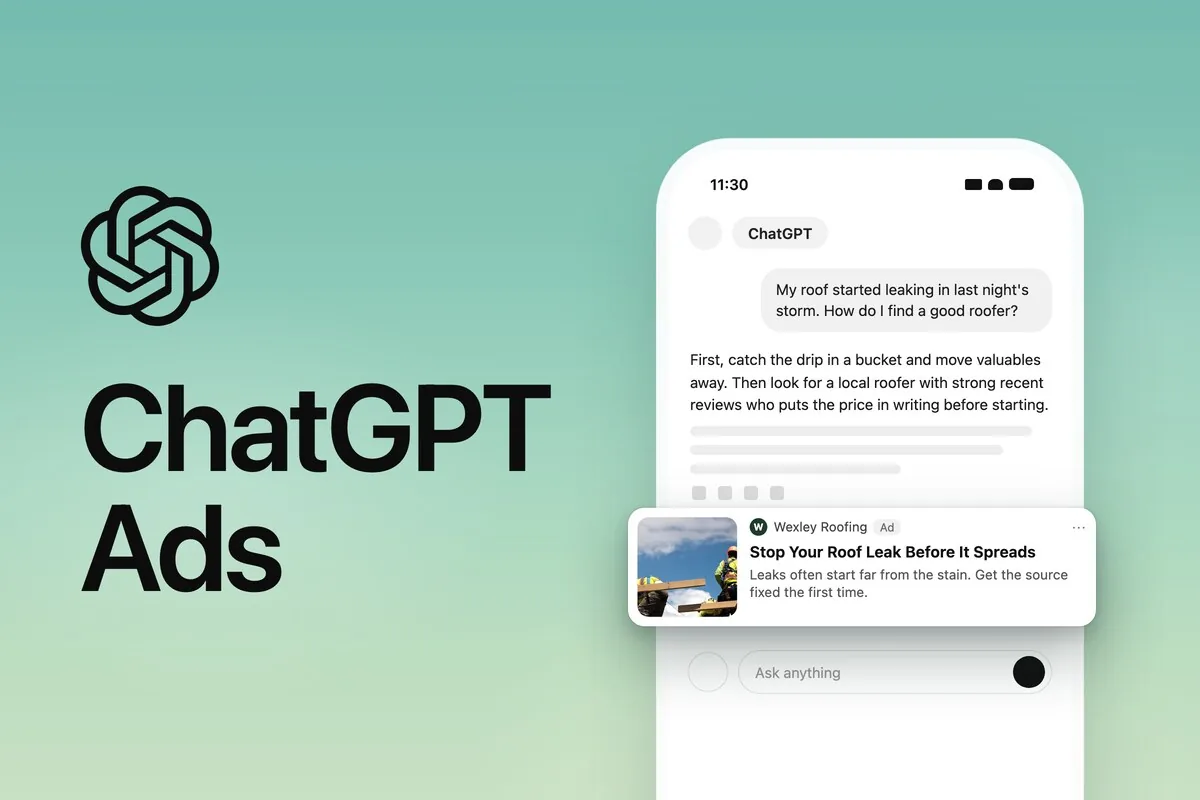
ChatGPT ads are paid ads that OpenAI shows in its chatbot, matched to what each person asks about.
Where the ad shows
The ad sits below ChatGPT’s answer with a clear label, and it can carry 1 image or several.
How ChatGPT picks which ad to show
ChatGPT looks at the conversation and what the person seems to want. It also reads your ad’s title and words, the page it sends people to, the notes you add about your business and your targeting. If the user has ads personalization on, ChatGPT can also use some of their past chats and what it remembers about them.
The winning ad is picked on relevance and bid together. So your landing page helps decide whether your ad appears at all.
The pros of ChatGPT ads
You reach people while they decide
Search ads use the words a person types. ChatGPT reads the whole conversation, so your ad can show up while someone compares options or asks what to do next. A buyer asking how to choose a kitchen contractor may be close to hiring one.
Likely fewer rivals, for now
Ad buying on ChatGPT is new, and our read is that fewer businesses bid for the same conversations here than on Google or Meta. Expect that edge to shrink as the platform grows.
You can start small
You can start at 25 dollars a day, in USD in the US or CAD in Canada. You can also have ChatGPT aim your ads at an action you pick, such as a purchase, though you’re still billed per click or per 1,000 views.
Reach only the area you serve
You pick 1 or more countries, then narrow down as far as postal codes where they’re available. To show ads to your own customer list, ChatGPT has to find at least 25,000 of the people on it among its users. A smaller business will usually target by place instead.
The cons of ChatGPT ads
A smaller audience
Ads show only to people on the Free and Go plans. Plus, Pro, Business, Enterprise and Edu show none. There are no ads for accounts identified as under 18 or in Temporary Chats. Free users can also switch to an ads‑free option with lower limits.
If you sell to companies whose teams use ChatGPT on work plans, many of your buyers won’t see your ad.
The ad sits under the answer
By the time someone reaches your ad, ChatGPT may have already answered the question. Some readers will have what they need and stop there. The upside is that only 1 ad shows at a time, so yours has that space to itself.
Results are hard to predict for now
OpenAI says how often your ad shows, and what you spend, can swing for now. It also has no benchmarks across industries yet, so there’s no typical cost per sale to aim for until you run your own test.
New accounts may start in their home country
So if your business sells in both the US and Canada, plan your first test around 1 market.
How do ChatGPT ads compare with Google and Meta ads?
ChatGPT ads can catch buyers closer to a decision than Meta does.
But you have less history to judge them by than on either one.
Who sees your ad
On Google, your ad shows when someone searches for what you sell.
On Meta, it shows in Facebook and Instagram feeds, and what the ad talks about largely decides who sees it.
On ChatGPT, it shows when the conversation fits your ad.
How ready they are to buy
On ChatGPT, the buyer may still be deciding, which is a good time to show up if your ad helps them choose.
On Meta, people came for something else, so your ad has to create the interest.
How much budget it can take
On Google, you can only spend as much as people search, and Keyword Planner shows that volume before you start.
On Meta, there’s no search limit, so it can take more budget as long as new ads keep selling.
On ChatGPT, the smaller audience above caps how far it can grow, so treat it as an add‑on to ads that already sell.
What you can prove
If you’ve run ads on Google or Meta, your own records show what a customer costs there. ChatGPT has no history for you yet, so your first test sets your baseline.
Should your business try ChatGPT ads?
Worth a test if your buyers use it. We start with a small budget and keep it only if it brings in sales.
Test it now if your buyers research and you can see sales
Your buyers look things up or ask around before they buy, such as for a new roof or business software. You already run ads, and you can see which ones turn into sales. A small test then has something to beat, and you’ll know if it worked.
Fix your tracking first if you can’t see which ads bring sales
Without it, a ChatGPT test ends in a guess about whether the ads worked. If you don’t run ads yet, start here too.
Wait if your buyers don’t research before they buy
If people buy from you on impulse, or without asking anyone first, there’s little conversation for your ad to match. Your budget will likely do more on Google or Meta for now.
Get the full steps to test these ads in your free ChatGPT Ads Guide, sent to your email.
How to run a ChatGPT ads test
Bid for the step closest to a sale
Pick the Conversions goal over Views, and point it at a paid order or a signed quote. Ads that only see clicks chase people who rarely buy.
Judge it on the sales in your own records
Use the numbers in OpenAI’s Ads Manager to steer as you go. Decide whether to keep ChatGPT ads at a cost per customer you’d pay again.
Change 1 thing at a time
If you test a new ad, keep the page the same, so you know what moved the result. Judge each change only once it has enough clicks and sales to compare, and leave the budget alone until then.
Common questions about ChatGPT ads.
Will a ChatGPT ad get my business mentioned in ChatGPT’s answer?
No, OpenAI keeps ads on separate systems from the answers. Advertisers can’t shape or rank what ChatGPT says. Clear headings and plain wording on your site make it easier for AI tools to quote you.
How do you start advertising on ChatGPT?
You sign up for Ads Manager at ads.openai.com. Businesses in Canada can sign up there too.
How much should you spend on a ChatGPT ads test?
Start at the daily minimum, and raise it in small steps only while your cost per customer holds. Spending more before your records show sales only makes a wrong call cost more.
Can health or financial businesses advertise on ChatGPT?
Only if they pass OpenAI’s strict rules for who can advertise. Ads also stay away from chats about personal or mental health, and from politics. So a clinic’s ad won’t sit under a question about someone’s own body.
What do you learn about the people who see your ad?
You get totals, such as views and clicks. You never see what people typed or saved in ChatGPT. Names, emails, exact locations and IP addresses stay private too.
What do you need set up to track sales from ChatGPT ads?
You need conversion tracking on your site, so Ads Manager can see the step that leads to a sale. OpenAI’s help pages explain how to connect Google Analytics 4 and how to set it up on a Shopify store.
Get your free ChatGPT Ads Guide.
Make ChatGPT ads prove they bring in sales before you raise the budget.The guide shows how to track your sales and judge a small test.Answer 4 quick questions to get your copy.
We send it to the email you enter at the end.
Get my free growth plan